Sand Casting Methods for Metalworking | A Complete Guide with CSG Extrusion Applications

Sand casting is one of the most widely used methods in metalworking and has remained an essential manufacturing process for centuries. It is valued for its simplicity, affordability, and ability to produce complex metal parts in a wide range of sizes. From small machine components to large industrial structures, sand casting continues to serve as a reliable production technique across many industries. In modern manufacturing, digital technologies such as csg extrusion have significantly improved the design and precision of sand casting molds, making the process even more efficient and accurate.
What Is Sand Casting in Metalworking?
Sand casting is a manufacturing process in which molten metal is poured into a mold cavity formed within specially prepared sand. After the metal cools and solidifies, the sand mold is broken away to reveal the final cast product. This method is known as an expendable mold process because the mold is destroyed after each use. Sand casting is suitable for producing components from metals such as iron, steel, aluminum, brass, bronze, and copper. Its ability to handle both simple and highly complex shapes makes it a preferred choice in metalworking industries.
The Process of Sand Casting
The sand casting process begins with the creation of a pattern, which is an exact replica of the final product with slight allowances for shrinkage during cooling. This pattern is used to form the cavity in the sand mold. In modern production environments, engineers often rely on csg extrusion in CAD software to create accurate digital models of patterns before physical manufacturing begins. This allows for better control over dimensions and design complexity.
Once the pattern is prepared, it is placed inside a molding box, commonly known as a flask. Sand mixed with clay, water, or chemical binders is tightly packed around the pattern to create the mold cavity. After the sand is compacted, the pattern is carefully removed, leaving behind the shape of the desired metal component.
If the casting requires hollow sections or internal channels, sand cores are inserted into the mold before the metal is poured. These cores help create internal spaces that would otherwise be impossible to achieve.
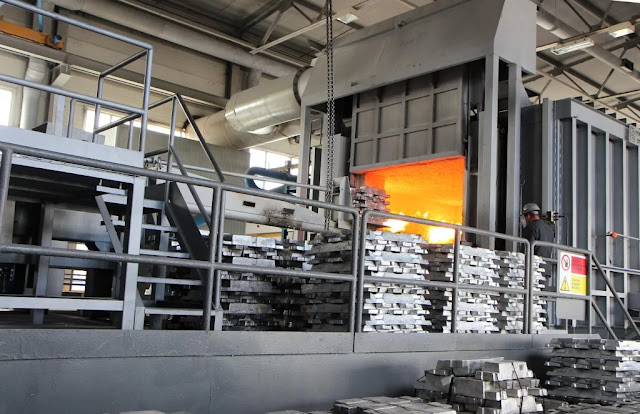
The molten metal is then heated in a furnace until it reaches the required pouring temperature. It is poured into the mold through a carefully designed gating system that directs the flow of metal into the cavity. After filling, the metal is allowed to cool and solidify.
Once solidified, the mold is broken apart, and the casting is removed. The final step involves cleaning and finishing operations such as grinding, trimming, polishing, or machining to achieve the desired surface finish and dimensions.
Types of Sand Casting Methods
There are several sand casting methods used in metalworking, each suitable for different applications and production requirements.
Green Sand Casting
Green sand casting is the most common and economical method. The mold is made from a mixture of silica sand, clay, and water. The term “green” refers to the moisture content of the sand rather than its color. This method is ideal for mass production of metal parts and is widely used in automotive and industrial manufacturing.
Dry Sand Casting
Dry sand casting involves baking the mold after it is formed. This removes moisture and strengthens the mold, making it more suitable for larger or heavier castings. It offers improved dimensional stability and better surface quality compared to green sand casting.
Resin Sand Casting
In this method, chemical binders such as resin are used instead of clay. This provides greater mold strength and higher precision. Resin sand casting is often used when intricate shapes and better surface finishes are required. Modern csg extrusion design tools play an important role here by helping engineers create detailed mold geometries with exceptional accuracy.
Shell Sand Casting
Shell molding uses resin-coated sand that is heated over a metal pattern to form a thin but strong shell. This method is ideal for producing parts with smooth surfaces and tight tolerances, making it suitable for high-volume industrial production.
Importance of Sand Quality
The quality of sand used in casting directly affects the final product. Good molding sand must be able to withstand high temperatures, maintain shape under pressure, and allow gases to escape during pouring. Silica sand is commonly used because of its excellent heat resistance. Binders such as clay or resin help hold the sand grains together, while additives improve strength and surface finish.
Proper sand selection ensures reduced casting defects and better product consistency. Advanced simulation through csg extrusion based software can help determine the best mold design and material distribution.
Advantages of Sand Casting
Sand casting offers several advantages that make it highly popular in metalworking. One of its biggest strengths is cost-effectiveness. The materials used in the mold are inexpensive, and the process itself requires relatively low tooling investment compared to other casting methods.
Another major advantage is flexibility. Sand casting can produce parts of almost any size, from small precision components to extremely large machine bodies weighing several tons. It is also capable of producing highly complex shapes that would be difficult to manufacture through machining alone.
With the integration of csg extrusion, engineers can now design even more sophisticated patterns and mold cavities, improving production accuracy while reducing waste.
Limitations of Sand Casting
Despite its benefits, sand casting has certain limitations. The surface finish is generally rougher compared to methods such as die casting or investment casting. Additional machining is often required to achieve the desired finish.
Dimensional tolerances may also be less precise, especially in large castings. Moreover, because each mold is single-use, the process can be slower for mass production compared to permanent mold techniques.
However, modern digital design tools such as csg extrusion have helped overcome many of these challenges by improving mold design accuracy and defect prediction.
Common Defects in Sand Casting
Several defects can occur during the sand casting process. Blow holes are small gas pockets formed when trapped gases fail to escape. Shrinkage cavities occur when the metal contracts during cooling. Misruns happen when the molten metal solidifies before completely filling the mold cavity.
Cold shuts occur when two streams of metal fail to fuse properly, creating a weak joint. Sand inclusions may also appear when particles from the mold become embedded in the casting surface.
By using csg extrusion simulation and mold flow analysis, manufacturers can identify potential problem areas before actual production begins, significantly reducing these defects.
Role of CSG Extrusion in Modern Metalworking
The use of csg extrusion has revolutionized sand casting in modern manufacturing. CSG, or Constructive Solid Geometry, is a CAD modeling technique where complex shapes are created by combining and modifying basic geometric forms such as cubes, cylinders, and spheres.
Extrusion allows 2D profiles to be extended into 3D solid objects, making it easier to design patterns and mold cavities with precise dimensions. In sand casting, csg extrusion is used to create accurate digital prototypes of metal parts before they are physically produced.
This technology helps reduce errors, optimize material usage, and speed up the production process. It also supports 3D printing of patterns, which has become increasingly common in advanced foundries.
Applications of Sand Casting
Sand casting is widely used in numerous industries. In the automotive sector, it is used for manufacturing engine blocks, cylinder heads, transmission housings, and brake components. In construction and heavy machinery, it is used for machine bases, pump housings, and industrial frames.
The aerospace industry also uses sand casting for complex lightweight metal components. Additionally, artistic sculptures and decorative metalwork are often created using this method because of its flexibility.
Conclusion
Sand casting remains one of the most important methods in metalworking due to its versatility, affordability, and ability to produce complex metal parts. While it is a traditional process, the integration of modern tools like csg extrusion has significantly improved its precision and efficiency.
By combining traditional foundry practices with advanced digital modeling, manufacturers can achieve higher quality castings, reduce defects, and improve production speed. As industries continue to evolve, sand casting supported by csg extrusion will remain a key part of modern metal fabrication.


Comments
Post a Comment